
Sterilisation Methods for Single-Use Plastic Medical Devices
Sterilisation is a critical step in medical device manufacturing, especially for single-use plastic medical devices. These devices are intended for one-time use and must be delivered sterile to ensure patient safety and regulatory compliance. Because many plastics are sensitive to heat and moisture, selecting the right medical device sterilisation method is essential to preserve product integrity while achieving the required sterility assurance level (SAL). Several sterilisation technologies are commonly used in the medical industry, each offering specific advantages depending on the device design, materials, and intended application.
Ethylene Oxide (EtO) Sterilisation for Plastic Medical Devices
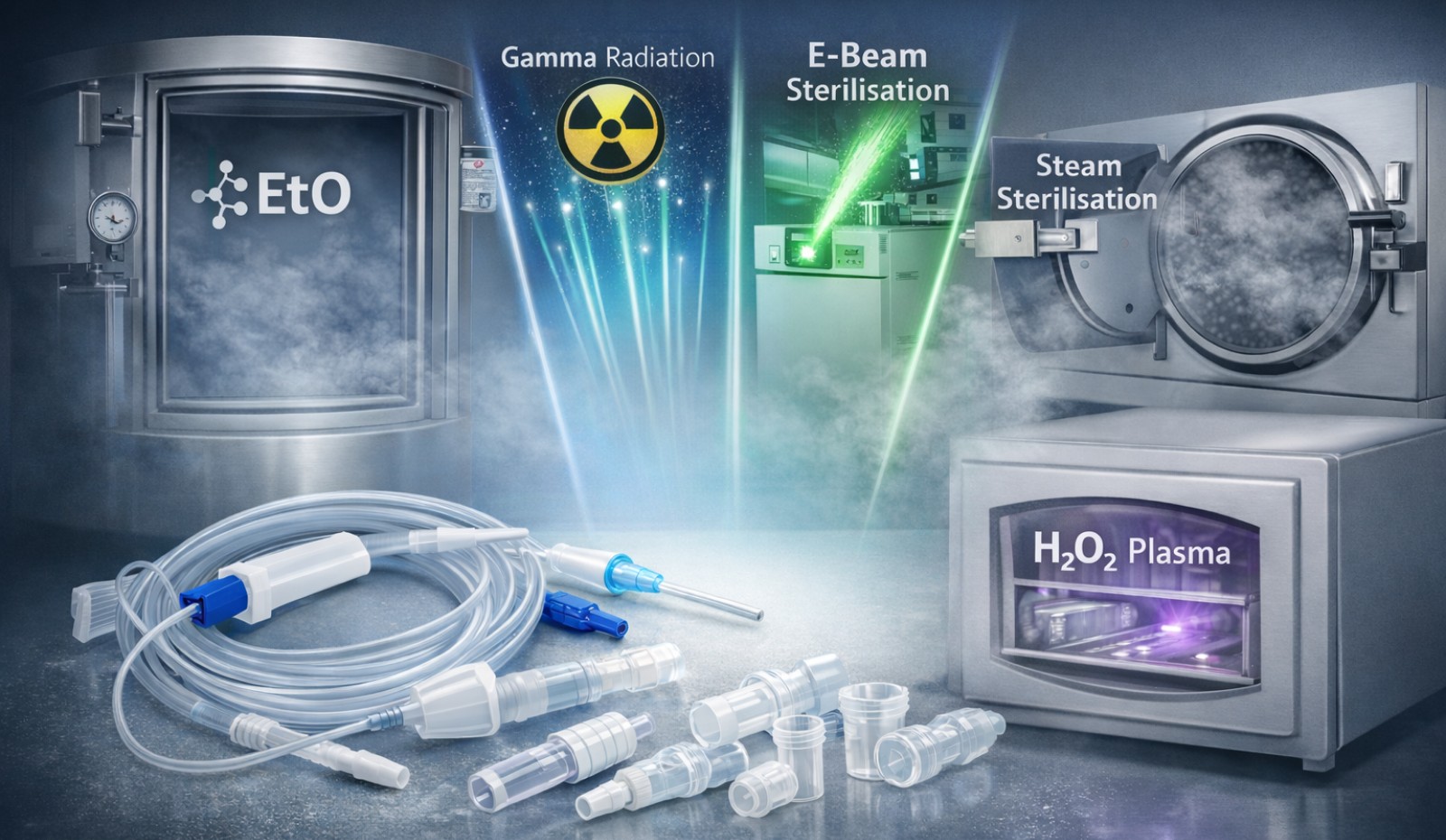
Ethylene oxide (EtO) sterilisation is one of the most widely used methods for single-use plastic medical devices. This low-temperature gaseous process is particularly suitable for heat-sensitive polymers and complex devices with long lumens or enclosed geometries. EtO sterilisation is compatible with many plastics commonly used in medical devices, including polyethylene (PE), polypropylene (PP), polycarbonate (PC), and elastomers. It is frequently used for tubing sets, connectors, catheters, and assembled disposable devices. Due to the toxic nature of ethylene oxide, strict control of residuals and thorough process validation are required to meet international regulatory standards.
Gamma Radiation Sterilisation
Gamma sterilisation uses high-energy photons, typically generated from Cobalt-60, to inactivate microorganisms. This method is widely applied to pre-packaged single-use medical devices, allowing products to be sterilised in their final packaging. Gamma radiation offers high reliability and is suitable for large-scale production. However, some plastic materials may be sensitive to radiation exposure, which can lead to changes in colour, mechanical properties, or long-term stability. Material selection and dose optimisation are therefore key considerations during product development.
Beta or Electron Beam (E-Beam) Sterilisation
Beta or Electron beam (E-beam) sterilisation is another radiation-based sterilisation method used for medical devices. It provides short processing times and does not require radioactive sources, simplifying logistics. E-beam sterilisation is best suited for plastic medical devices with limited thickness and relatively simple geometries, as its penetration depth is lower than gamma radiation. As with all radiation methods, compatibility with polymers must be carefully evaluated.
Steam Sterilisation and Its Limitations
Steam sterilisation, also known as autoclaving, is highly effective but generally unsuitable for most single-use plastic medical devices. The high temperatures and moisture involved can cause deformation or material degradation, limiting its use primarily to reusable instruments or heat-resistant components.
Low-Temperature Alternatives
Low-temperature sterilisation methods, such as hydrogen peroxide-based processes, are increasingly used for specific medical applications. While these methods offer short cycle times and minimal residues, their limited penetration makes them less suitable for disposable plastic devices with long lumens or complex internal channels.
Designing Single-Use Medical Devices with Sterilisation in Mind
For single-use plastic medical devices, sterilisation should be considered early in the design process. Material selection, wall thickness, assembly methods, and packaging all influence sterilisation compatibility. Integrating these factors from the outset helps ensure regulatory compliance, consistent product quality, and reliable performance throughout the device’s shelf life. Understanding the different sterilisation methods for medical devices enables manufacturers to develop safe, compliant, and efficient single-use solutions for modern healthcare. Promepla can provide contract sterilisation services tailored to your medical devices. We specialise in Ethylene Oxide (EtO), Gamma and Beta sterilisation. Our experts are on hand to advise on and undertake every aspect of the sterilisation process, from development to validation.

Latest news
November 6, 2025
Customers IFU

Our websites