
Elastomers and Their Role in Medical Device Manufacturing
Understanding Elastomers and Their Role in Medical Device Manufacturing
In the world of medical devices, materials play a crucial role in ensuring the safety, efficacy, and durability of the products. Among these materials, elastomers stand out due to their unique properties and versatility.
What Are Elastomers?
Elastomers are a type of polymer with elastic properties, meaning they can return to their original shape after being stretched or deformed. The term “elastomer” is derived from “elastic polymer.” These materials can be natural or synthetic and are known for their rubber-like flexibility and resilience. Elastomers are composed of long, coiled polymer chains that can be easily stretched and then return to their original form when the stress is released.
Types of Elastomers
Elastomers can be broadly categorised into two types: thermoplastic elastomers (TPEs) and thermoset elastomers (TSEs).
- Thermoplastic Elastomers (TPEs): These elastomers can be melted and reshaped multiple times without undergoing any significant chemical change. TPEs combine the properties of rubber with the processing advantages of plastics. They are widely used in medical applications due to their ease of processing, recyclability, and ability to be sterilised.
- Thermoset Elastomers (TSEs): These elastomers undergo a curing process called vulcanisation, which creates strong chemical bonds that cannot be re-melted or reshaped. TSEs are known for their excellent mechanical properties and resistance to high temperatures and chemicals. However, they are not as easily recyclable as TPEs.
Characteristics of Elastomers
Elastomers possess several key characteristics that make them suitable for medical device manufacturing:
- Elasticity: Elastomers can stretch significantly and return to their original shape, making them ideal for applications that require flexibility and resilience.
- Biocompatibility: Many elastomers are biocompatible, meaning they do not cause adverse reactions when in contact with human tissues. This is crucial for medical devices that are used internally or come into direct contact with the body.
- Chemical Resistance: Elastomers are resistant to a wide range of chemicals, including bodily fluids, which ensures the durability and longevity of medical devices.
- Sterilisation: Elastomers can withstand various sterilisation methods, such as autoclaving, gamma radiation, and ethylene oxide, ensuring that medical devices remain sterile and safe for use.
Applications of Elastomers in Medical Device Manufacturing
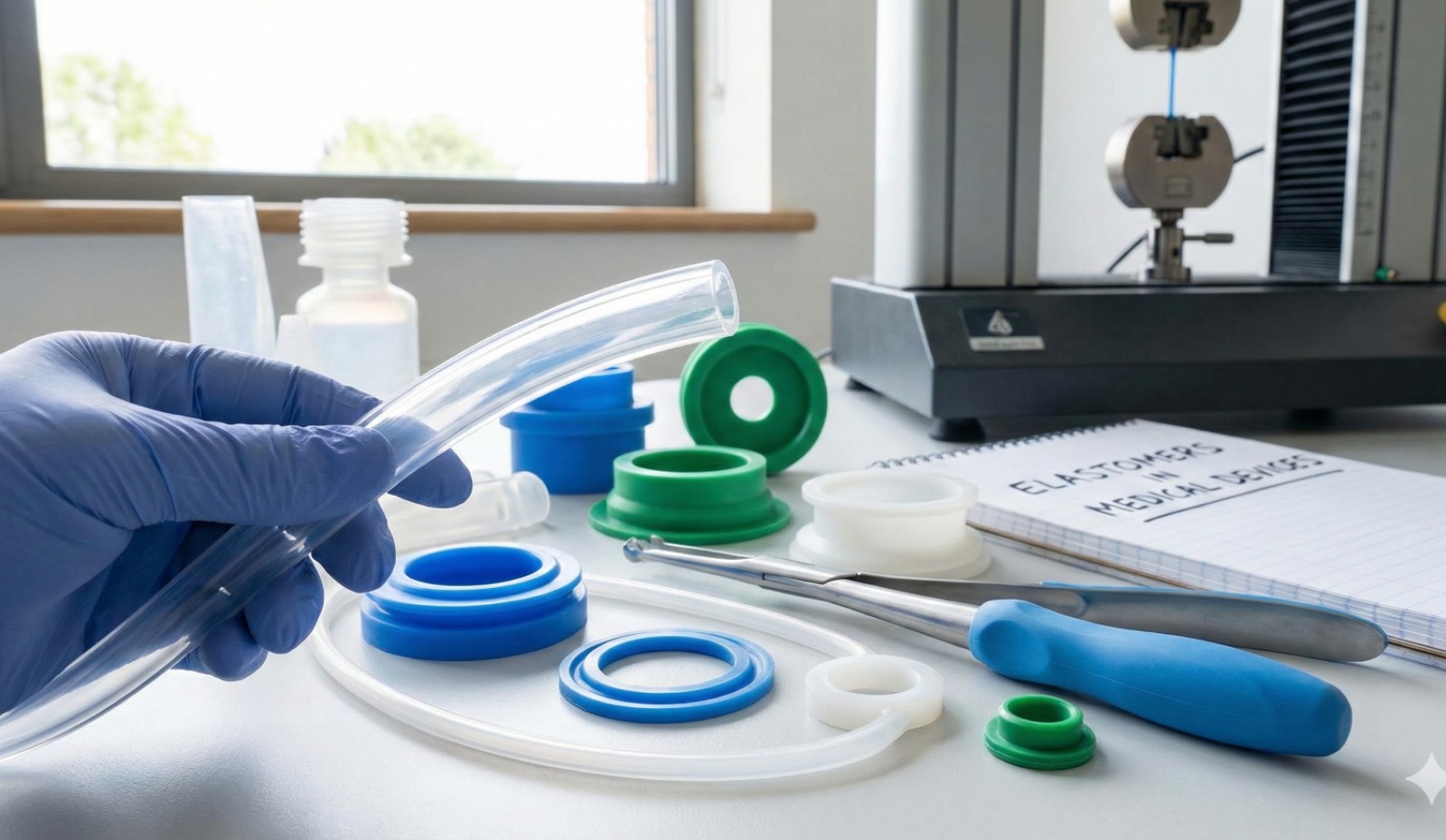
Elastomers are used in a variety of medical devices due to their unique properties. Some common applications include:
- Medical Tubing: Elastomers are used to manufacture flexible and durable tubing for various medical applications, including intravenous (IV) lines, catheters, and respiratory equipment. The elasticity and biocompatibility of elastomers make them ideal for these applications.
- Implants and Prosthetics: Elastomers are used to create implants and prosthetics that require flexibility and durability. For example, silicone elastomers are commonly used in breast implants and joint replacements due to their biocompatibility and ability to mimic the properties of natural tissues.
- Seals and Gaskets: Elastomeric seals and gaskets are used in medical devices to prevent leaks and ensure the integrity of the device. These components must be flexible, durable, and resistant to various chemicals and sterilisation processes.
- Wearable Devices: Elastomers are used in the production of wearable medical devices, such as fitness trackers and medical sensors. The flexibility and comfort provided by elastomers make them suitable for devices that need to be worn for extended periods.
- Surgical Instruments: Elastomers are used to manufacture handles and grips for surgical instruments, providing comfort and control to healthcare professionals during procedures. The ability to mould elastomers into ergonomic shapes enhances the usability of these instruments.
Advantages of Using Elastomers in Medical Device Manufacturing
The use of elastomers in medical device manufacturing offers several advantages:
- Customisation: Elastomers can be easily moulded into complex shapes and designs, allowing for the production of customised medical devices that meet specific patient needs.
- Durability: Elastomers offer excellent mechanical properties, such as impact resistance and flexibility, ensuring that medical devices are durable and reliable.
- Cost-Effectiveness: The ability to mass-produce elastomeric components efficiently reduces manufacturing costs, making medical devices more affordable.
- Recyclability: Thermoplastic elastomers, in particular, can be recycled and reshaped, contributing to more sustainable manufacturing practices.
Elastomers play a vital role in the manufacturing of medical devices, offering a combination of flexibility, durability and biocompatibility. Understanding the unique properties and applications of different elastomers enables manufacturers to select the most suitable materials for their products, thereby enhancing patient care and safety. Please feel free to contact Promepla’s R&D team to discuss this fascinating topic of elastomers and to guide you in your search for materials for your medical devices.

Latest news
November 6, 2025
November 5, 2025
Customers IFU

Our websites