
Flow Management Components in Medical Devices: Clamps, Clips, Stopcocks and Manifolds Explained
Fluid management plays a central role in many medical devices and disposable systems used in hospitals, laboratories and clinical environments. From infusion therapy to dialysis and diagnostic equipment, reliable control of fluid flow is essential for safe and efficient device operation. A wide range of components are used to regulate, direct or secure the flow of liquids through medical tubing systems. Among the most common are clamps, clips, stopcocks and manifolds, each designed to perform specific functions within a fluid management system. Understanding the differences between these components helps device designers select the most appropriate solution for their application.
Clamps for medical tubing
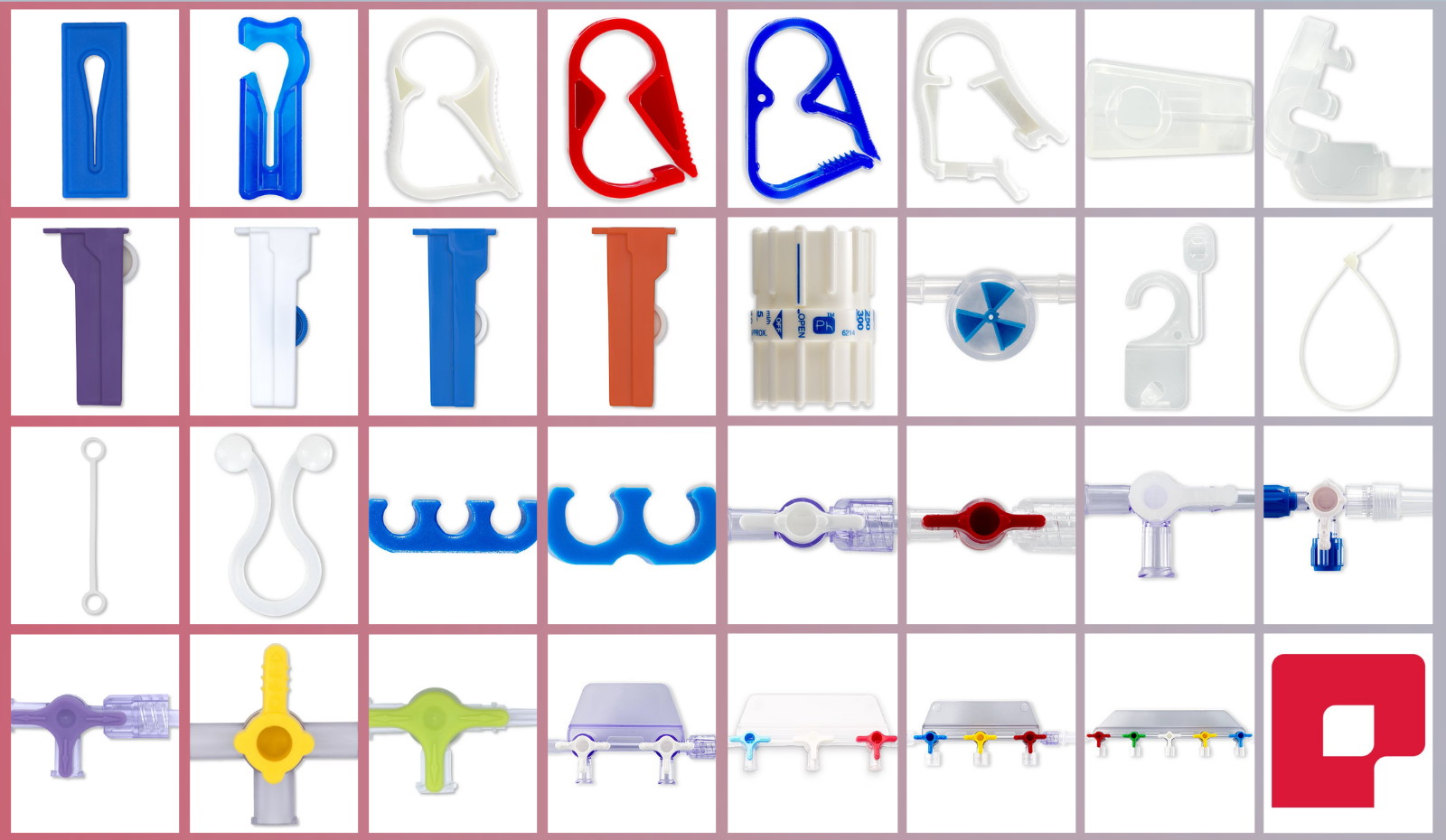
Clamps are widely used in disposable medical devices to control, restrict or stop the flow of fluids in flexible tubing. Several types exist, each offering different levels of control, ergonomics and cost.
Slide Clamps
Slide clamps are among the simplest and most cost-effective options. Their main characteristics include:
- Available in open or closed versions
- Typically operated with two hands when opening or closing
- Simple design and low manufacturing cost
In the Promepla component catalog, slide clamps are available for tubing sizes ranging from 2.0 mm to 12 mm. 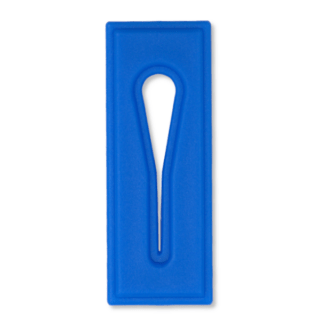

Pinch Clamps
Pinch clamps offer improved ergonomics compared with slide clamps because they can typically be operated with one hand. They are generally available in several size categories:
- Micro: 1.0 – 2.0 mm
- Small: 2.0 – 4.1 mm
- Medium: 3.0 – 5.5 mm
- Large: 5.5 – 6.8 mm
Pinch clamps can be designed with different operating modes:
- ON/OFF clamps for simple flow control

- Multi-step clamps with 2, 6 or 12 positions to adjust flow levels
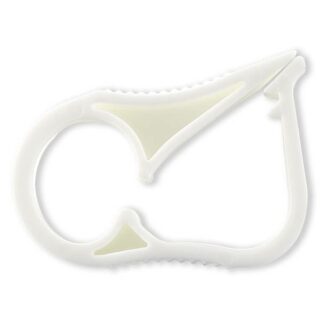
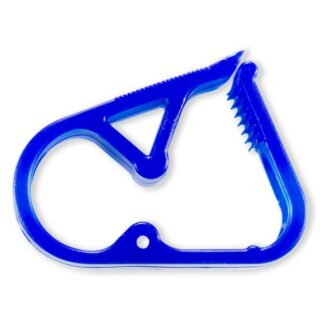
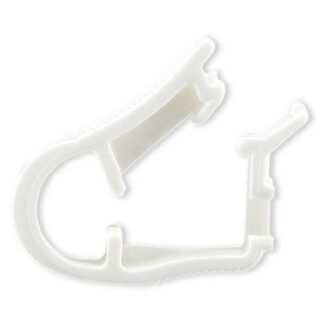
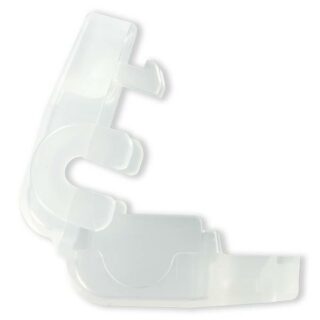
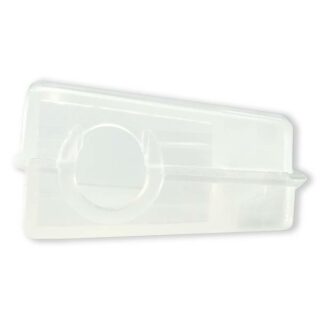
- Open pinch clamps can also be requested. In this design, the clamp is supplied in an open configuration and can be mounted onto the tubing during assembly without having to thread the tube through the clamp. This can significantly simplify and accelerate the assembly process, particularly in high-volume production environments where tubing sets contain multiple components. Another advantage of open versions is that they allow the clamp to be replaced if a defect or malfunction is detected during assembly, without having to discard the entire tubing set. This flexibility can help improve manufacturing efficiency and reduce material waste during production.
Roller Clamps
Roller clamps are commonly used in infusion and IV systems. They allow healthcare professionals to gradually adjust the flow rate of a fluid, typically by monitoring the drip rate in a drip chamber. The operating principle is simple:
- Roller moved upward → tubing opens → flow increases
- Roller moved downward → tubing compresses → flow decreases
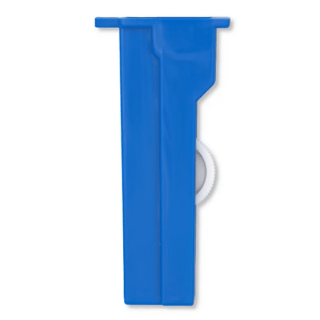
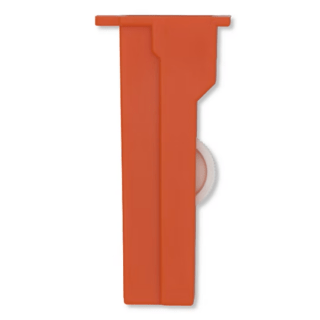
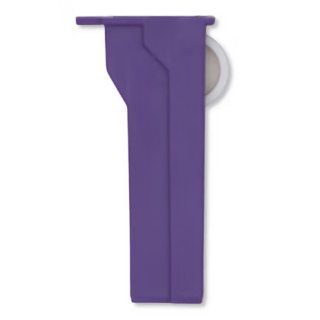
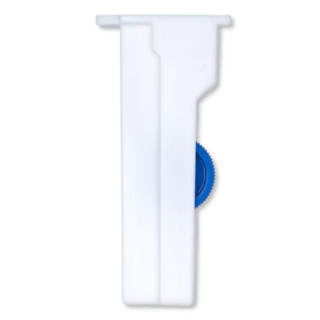
Roller clamps consist of two components, the body and the roller wheel, which can be produced in multiple colour combinations. Versions are available with or without a tubing clip.
Non-Reopening Clamps
Some applications require clamps that cannot be reopened once closed. These non-reopening clamps, such as umbilical cord clamps, are designed for single-use situations where permanent closure is required.
Additional Flow Management Accessories
In addition to clamps, several other accessories are used to support fluid control systems.
- Flow Controllers
Flow controllers are designed to regulate the flow of fluids in tubing systems with greater precision than simple clamps. 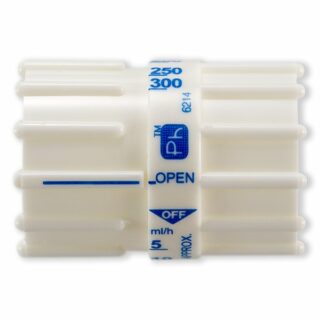
- Flow Indicators
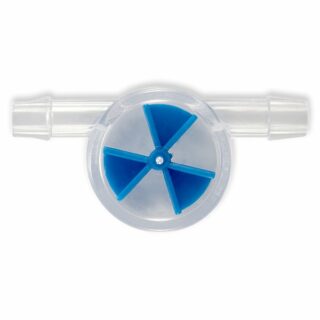
Flow indicators provide a visual indication of whether fluid is passing through a line. However, they typically do not provide a quantitative measurement of flow rate, which requires additional measuring devices.
- ON/OFF Switches
ON/OFF switches or valve-based interrupters can be integrated into fluid systems to quickly start or stop the flow of liquids.
Clips and tubing accessories
Various clips are used to secure tubing or organise fluid management systems. Examples include:
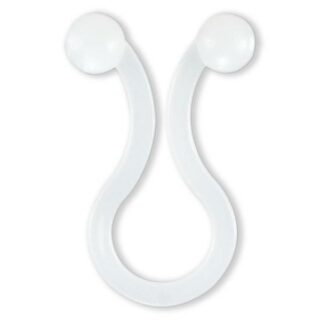
- Twist clips for heparin lines and cable ties used to attach two lines together
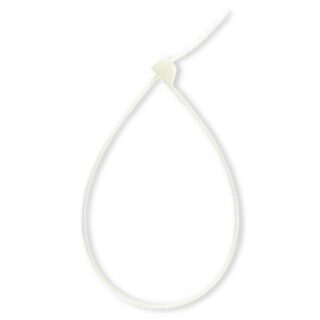
- Straps, for connectors or caps
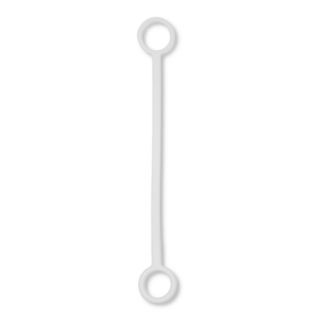
- Tubing dispenser clips

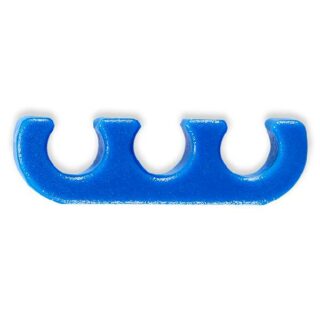
- Bag hangers, used to suspend fluid bags in medical setups
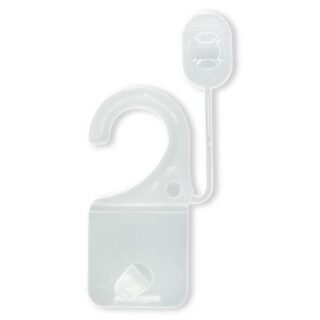
These accessories help improve system organisation and usability in clinical environments.
Stopcocks: directing fluid flow
Stopcocks are key components in many medical fluid systems. They allow healthcare professionals to direct, mix or stop fluid flow between multiple tubing lines.
Understanding stopcock “ways”
The number of “ways” in a stopcock refers to the possible flow paths rather than the number of ports. Most stopcocks have two or three ports, but their internal design allows different fluid routing configurations:
- 1-way stopcock – 2 ports, 90° rotation
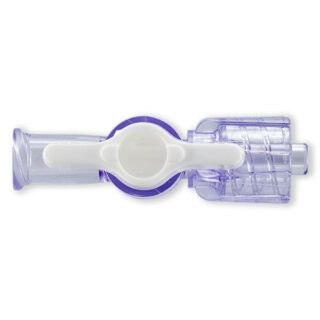
- 1-way stopcock – 2 ports, 360° rotation
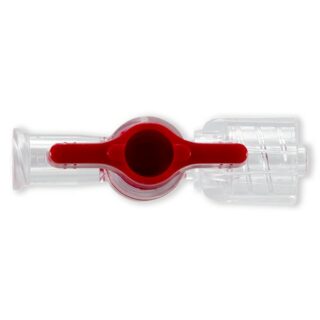
- 2-way stopcock – 3 ports, 90° rotation
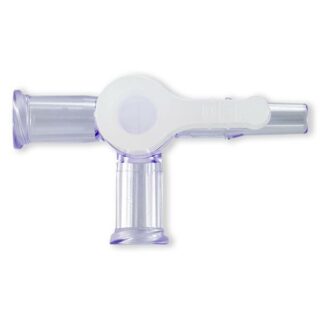
- 3-way stopcock – 3 ports, 180° rotation
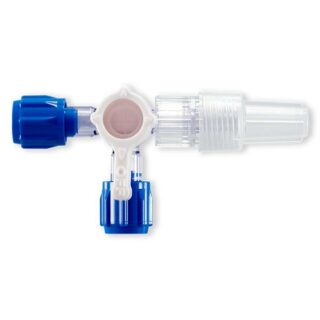
- 4-way stopcock – 3 ports, 360° rotation
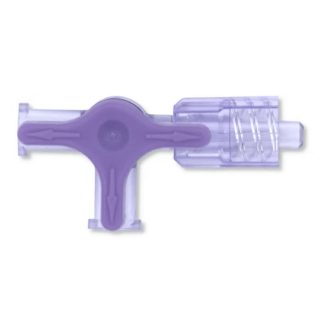
A closed position typically occurs when the handle is positioned at 45°, blocking all flow paths.
Stopcock Handles
Two main handle designs are commonly used:
- ON handle: three arms indicating the three closed paths
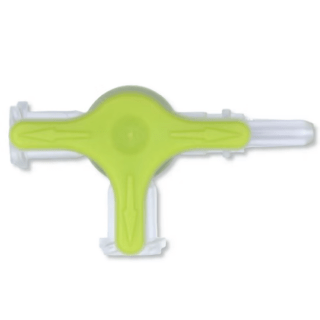
- OFF handle: one arm indicating the open flow path
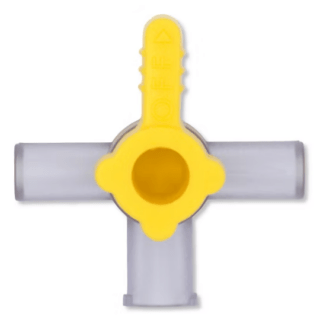
These visual cues help users quickly identify the flow configuration.
Diameters, Materials and Manufacturing
The internal diameter can vary between manufacturers and product ranges, influencing flow rate and maximum pressure capability. Some stopcocks are designed for high-flow channels, as A. Hopf stopcocks. Typical materials include:
- Polycarbonate (PC)
- Tritan™ copolyester
- Polysulfone (PSU)
Handles are often produced in polyethylene high-density (PEHD). In the manufacture of certain medical components, including stopcocks in PC with tubing bonding ports, annealing can be an important production step as it enhances reliability. Annealing is a controlled thermal process used to relieve internal stresses created during injection moulding. These stresses can otherwise increase the risk of environmental stress cracking, particularly when components are exposed to aggressive solvents during tubing bonding operations. By stabilising the material structure, annealing can help improve durability and long-term consistency of performance.
Manifolds in fluid management systems
Manifolds are multi-port components designed to distribute fluids between several lines. Two main standard configurations are commonly available:
- All female Luer ports
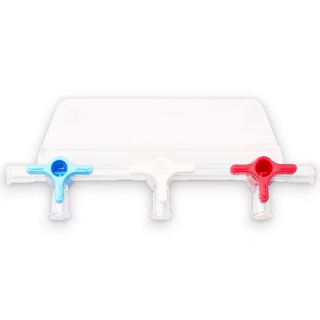
- Right-side rotating male Luer port
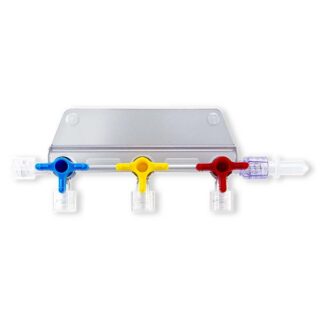
Manifolds can be supplied:
- With or without caps
- In different colours
- With two to five handles
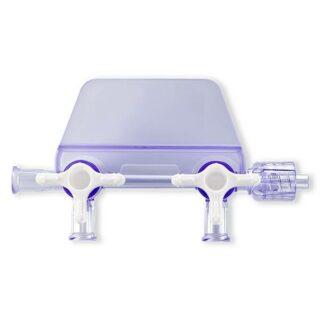
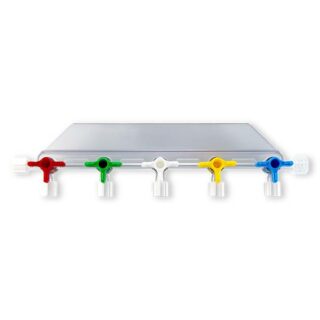
Unlike standard connectors, manifolds are often semi-customised components and are therefore rarely kept in stock. Their final configuration may vary depending on required volumes and application-specific requirements.
Selecting the Right Flow Management Components
Designing a reliable fluid management system requires careful selection of the appropriate components, taking into account:
- Tubing diameter and materials
- Required flow control precision
- Pressure and compatibility requirements
- Ease of use for healthcare professionals
- Assembly and manufacturing considerations
From simple clamps to complex manifolds, these components contribute to the performance and usability of medical devices involving fluid transfer. Promepla’s team can support medical device manufacturers in selecting the most appropriate flow management components for their applications. If you already have specific requirements, you can explore our component catalog and contact us to request product samples.

Latest news
November 6, 2025
Customers IFU

Our websites