
Types of Thermoplastics Used in Medical Device Manufacturing
Exploring the Types of Thermoplastics Used in Medical Device Manufacturing
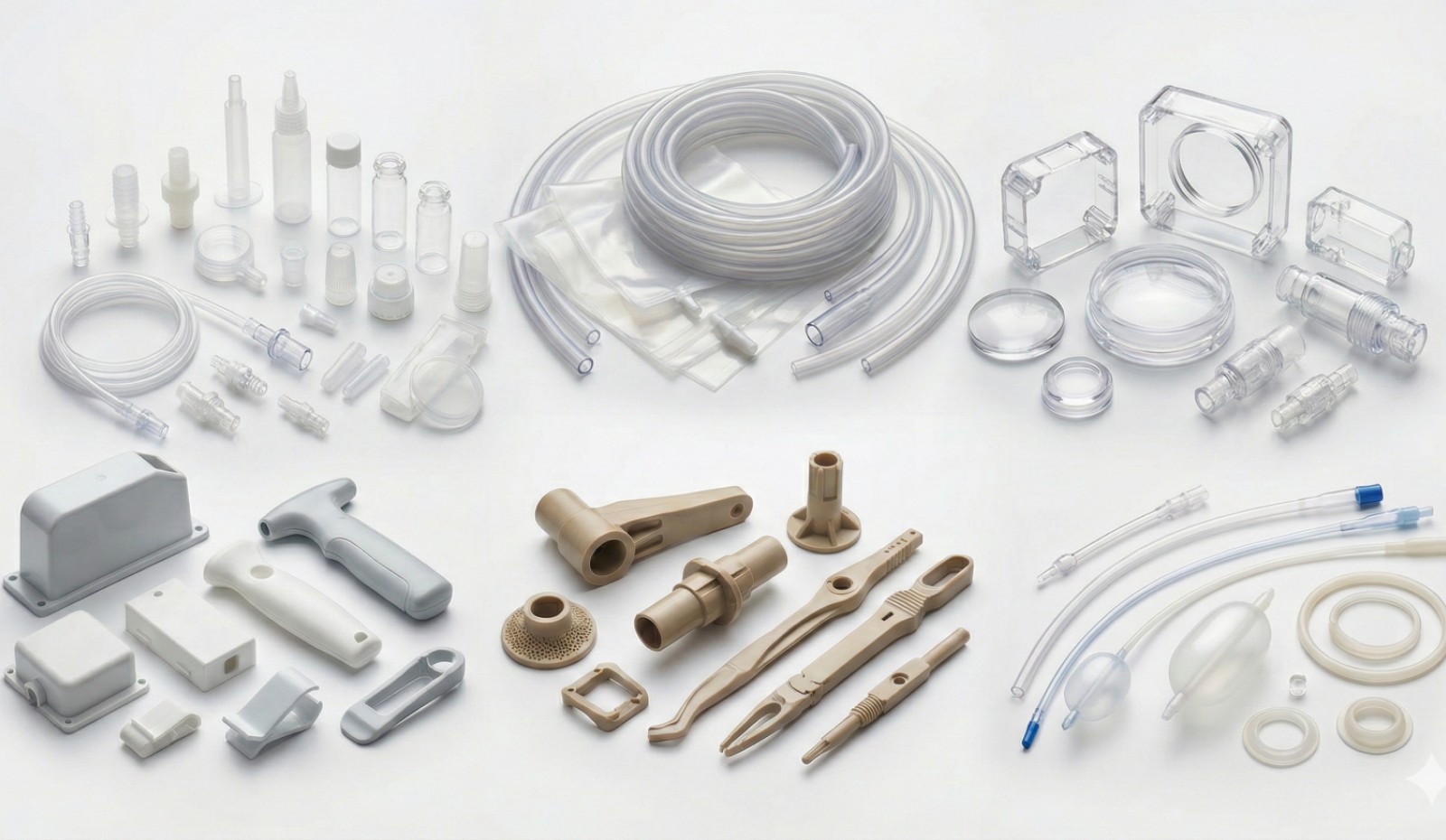
In the realm of medical device manufacturing, the choice of materials is crucial for ensuring the safety, efficacy, and durability of the final products. Thermoplastics have emerged as a preferred material due to their versatility, biocompatibility, and ease of processing. Explore the different types of thermoplastics commonly used in medical device manufacturing, highlighting their unique properties and applications.
What Are Thermoplastics?
Thermoplastics are a category of polymers that become pliable or mouldable upon heating and solidify upon cooling. This reversible process allows thermoplastics to be reshaped and recycled. Their adaptability makes them ideal for a wide range of medical applications, from disposable items to complex, high-precision components.
Common Types of Thermoplastics in Medical Device Manufacturing
-
Polypropylene (PP)
Polypropylene is a widely used thermoplastic known for its excellent chemical resistance and high melting point. It is often used in the production of disposable syringes, medical vials, and laboratory equipment. Its ability to withstand sterilisation processes, such as autoclaving, makes it suitable for medical applications where hygiene is paramount.
-
Polyethylene (PE)
Polyethylene, available in various densities (HDPE, LDPE), is valued for its impact resistance, flexibility, and low moisture absorption. It is commonly used in the manufacturing of surgical implants, tubing, and containers. High-density polyethylene (HDPE) is particularly favoured for its strength and durability, making it ideal for medical storage containers and prosthetics.
-
Polyvinyl Chloride (PVC)
Polyvinyl chloride is a versatile thermoplastic that can be formulated to be either rigid or flexible. It is extensively used in medical tubing, blood bags, and IV containers. PVC’s ability to be sterilised using various methods, including ethylene oxide and gamma radiation, enhances its suitability for medical applications. Additionally, its transparency allows for easy monitoring of fluid flow.
-
Polycarbonate (PC)
Polycarbonate is known for its high impact resistance, optical clarity, and ability to withstand sterilisation processes. It is often used as a glass substitute in medical devices, such as syringes, blood oxygenators, and surgical instruments. Its transparency and toughness make it an excellent choice for components that require both visibility and durability.
-
Acrylonitrile Butadiene Styrene (ABS)
ABS is a robust thermoplastic with good impact resistance and toughness. It is commonly used in the production of medical device housings, enclosures, and handles. ABS can be easily moulded and coloured, allowing for the creation of ergonomic and aesthetically pleasing medical devices. Its resistance to various sterilisation methods further enhances its applicability.
-
Polyetheretherketone (PEEK)
PEEK is a high-performance thermoplastic known for its exceptional mechanical properties, chemical resistance, and biocompatibility. It is often used in the production of implants, such as spinal cages and dental implants, due to its ability to withstand the harsh conditions within the human body. PEEK’s high melting point and stability make it suitable for long-term medical applications.
-
Thermoplastic Polyurethane (TPU)
TPU is a versatile thermoplastic elastomer that combines the properties of rubber and plastic. It is used in medical applications that require flexibility, such as catheters, wound dressings, and medical tubing. TPU’s biocompatibility and resistance to abrasion and chemicals make it an ideal material for devices that come into direct contact with the human body.
-
Thermoplastic Polyoxymethylene (POM)
Also known as Polyacetal, POM is an engineering polymer widely used in industry for its excellent mechanical properties and high dimensional stability. POM is distinguished above all by its high rigidity, good mechanical strength and low friction, making it an ideal material for moving parts. It also has very good wear resistance, excellent fatigue resistance, and very low moisture absorption, enabling it to maintain stable dimensions even in humid environments.
Advantages of Using Thermoplastics in Medical Device Manufacturing
The use of thermoplastics in medical device manufacturing offers several advantages:
- Biocompatibility: Many thermoplastics are biocompatible, meaning they do not cause adverse reactions when in contact with human tissues. This is crucial for implants and devices that are used internally.
- Sterilisation: Thermoplastics can withstand various sterilisation methods, including autoclaving, gamma radiation, and ethylene oxide. This ensures that medical devices remain sterile and safe for use.
- Customisation: Thermoplastics can be easily moulded, extruded or welded into complex shapes and designs, allowing for the production of customized medical devices that meet specific patient needs.
- Cost-Effectiveness: The ability to mass-produce thermoplastic components efficiently reduces manufacturing costs, making medical devices more affordable.
- Durability: Thermoplastics offer excellent mechanical properties, such as impact resistance and flexibility, ensuring that medical devices are durable and reliable.
Thermoplastics play a vital role in the medical device manufacturing industry, offering a combination of biocompatibility, versatility, and cost-effectiveness. By understanding the unique properties and applications of different thermoplastics, manufacturers can select the most suitable materials for their products, ultimately enhancing patient care and safety. At Promepla, our research and development team can advise you on your choice of thermoplastic materials for medical devices, whether for extrusion or injection moulded parts. Besides, we also work using PVC-free materials. Please do not hesitate to contact us for advice.

Latest news
November 6, 2025
November 5, 2025
Customers IFU

Our websites