


Elastomere und ihre Rolle in der Herstellung medizinischer Geräte
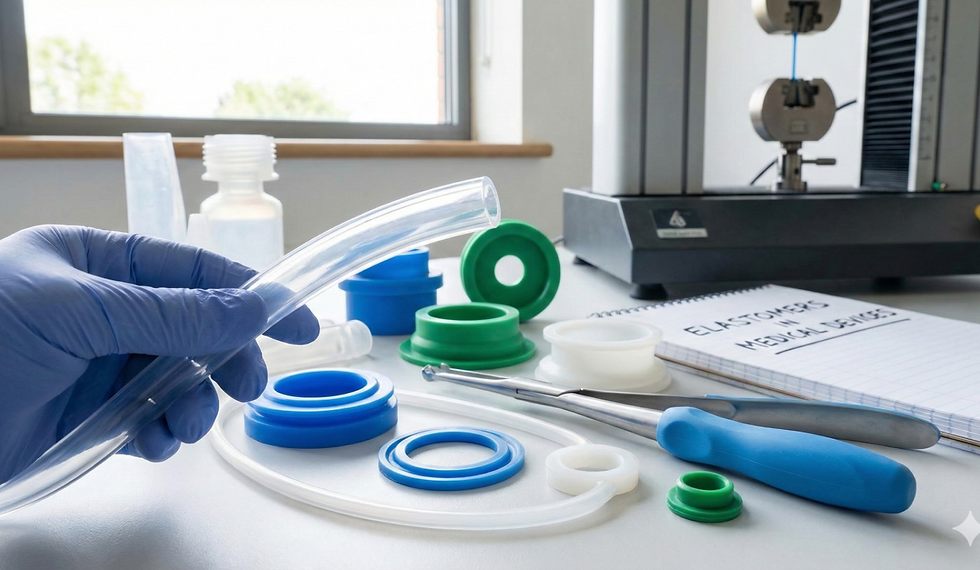
Elastomere und ihre Rolle in der Medizintechnik
In der Medizintechnik spielen Materialien eine entscheidende Rolle für die Sicherheit, Wirksamkeit und Langlebigkeit der Produkte. Elastomere zeichnen sich durch ihre einzigartigen Eigenschaften und ihre Vielseitigkeit aus.
Was sind Elastomere?
Elastomere sind Polymere mit elastischen Eigenschaften. Das bedeutet, dass sie nach Dehnung oder Verformung in ihre ursprüngliche Form zurückkehren. Der Begriff „Elastomer“ leitet sich von „elastischem Polymer“ ab. Diese Materialien können natürlichen oder synthetischen Ursprungs sein und sind für ihre gummiartige Flexibilität und Elastizität bekannt. Elastomere bestehen aus langen, gewundenen Polymerketten, die sich leicht dehnen lassen und nach Entlastung wieder in ihre ursprüngliche Form zurückkehren.
Arten von Elastomeren
Elastomere lassen sich grob in zwei Typen unterteilen: thermoplastische Elastomere (TPEs) und duroplastische Elastomere (TSEs).
Thermoplastische Elastomere (TPEs): Diese Elastomere können mehrfach eingeschmolzen und umgeformt werden, ohne dass sich ihre chemische Zusammensetzung wesentlich verändert. TPEs vereinen die Eigenschaften von Gummi mit den Verarbeitungsvorteilen von Kunststoffen. Aufgrund ihrer einfachen Verarbeitung, Recyclingfähigkeit und Sterilisierbarkeit werden sie häufig in der Medizin eingesetzt.
Duroplastische Elastomere (TSEs): Diese Elastomere durchlaufen einen Aushärtungsprozess, die sogenannte Vulkanisation. Dabei entstehen starke chemische Bindungen, die ein erneutes Einschmelzen oder Umformen verhindern. TSEs sind bekannt für ihre hervorragenden mechanischen Eigenschaften und ihre Beständigkeit gegenüber hohen Temperaturen und Chemikalien. Sie sind jedoch nicht so leicht recycelbar wie TPEs.
Eigenschaften von Elastomeren
Elastomere besitzen mehrere wichtige Eigenschaften, die sie für die Herstellung von Medizinprodukten prädestinieren:
Elastizität: Elastomere sind stark dehnbar und kehren in ihre ursprüngliche Form zurück. Dadurch eignen sie sich ideal für Anwendungen, die Flexibilität und Rückstellkraft erfordern.
Biokompatibilität: Viele Elastomere sind biokompatibel, d. h. sie rufen bei Kontakt mit menschlichem Gewebe keine unerwünschten Reaktionen hervor. Dies ist entscheidend für Medizinprodukte, die intern angewendet werden oder in direkten Körperkontakt kommen.
Chemikalienbeständigkeit: Elastomere sind beständig gegen eine Vielzahl von Chemikalien, einschließlich Körperflüssigkeiten. Dies gewährleistet die Haltbarkeit und Langlebigkeit von Medizinprodukten.
Sterilisation: Elastomere sind beständig gegen verschiedene Sterilisationsverfahren wie Autoklavieren, Gammabestrahlung und Ethylenoxid. Dadurch wird sichergestellt, dass Medizinprodukte steril und sicher in der Anwendung bleiben.
Applications of Elastomers in Medical Device Manufacturing
Elastomers are used in a variety of medical devices due to their unique properties. Some common applications include:
Medical Tubing: Elastomers are used to manufacture flexible and durable tubing for various medical applications, including intravenous (IV) lines, catheters, and respiratory equipment. The elasticity and biocompatibility of elastomers make them ideal for these applications.
Implants and Prosthetics: Elastomers are used to create implants and prosthetics that require flexibility and durability. For example, silicone elastomers are commonly used in breast implants and joint replacements due to their biocompatibility and ability to mimic the properties of natural tissues.
Seals and Gaskets: Elastomeric seals and gaskets are used in medical devices to prevent leaks and ensure the integrity of the device. These components must be flexible, durable, and resistant to various chemicals and sterilisation processes.
Wearable Devices: Elastomers are used in the production of wearable medical devices, such as fitness trackers and medical sensors. The flexibility and comfort provided by elastomers make them suitable for devices that need to be worn for extended periods.
Surgical Instruments: Elastomers are used to manufacture handles and grips for surgical instruments, providing comfort and control to healthcare professionals during procedures. The ability to mould elastomers into ergonomic shapes enhances the usability of these instruments.
Advantages of Using Elastomers in Medical Device Manufacturing
The use of elastomers in medical device manufacturing offers several advantages:
Customisation: Elastomers can be easily moulded into complex shapes and designs, allowing for the production of customised medical devices that meet specific patient needs.
Durability: Elastomers offer excellent mechanical properties, such as impact resistance and flexibility, ensuring that medical devices are durable and reliable.
Cost-Effectiveness: The ability to mass-produce elastomeric components efficiently reduces manufacturing costs, making medical devices more affordable.
Recyclability: Thermoplastic elastomers, in particular, can be recycled and reshaped, contributing to more sustainable manufacturing practices.
Elastomers play a vital role in the manufacturing of medical devices, offering a combination of flexibility, durability and biocompatibility. Understanding the unique properties and applications of different elastomers enables manufacturers to select the most suitable materials for their products, thereby enhancing patient care and safety. Please feel free to contact Promepla’s R&D team to discuss this fascinating topic of elastomers and to guide you in your search for materials for your medical devices.